What is Write on Art?
Write on Art is an annual national writing competition sponsored by Art UK and the Paul Mellon Centre to encourage an interest in art history and art writing among young people.
The prize is free to enter and is open to all UK students in the following year groups:
England and Wales: Years 10 & 11 / 12 & 13
Northern Ireland: Years 11 & 12 / 13 & 14
Scotland: S3 & S4 / S5 & S6
How do I enter?
To enter Write on Art, all you have to do is pick one artwork that fascinates you from Art UK's website and write about it. Please note, we cannot accept entries for artworks that are not on Art UK.
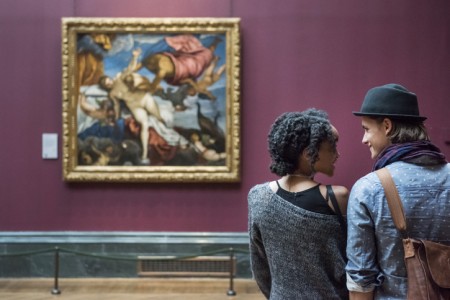
What does the artwork say to you? What's the history behind it? How does it make you feel? This is your opportunity to write about the things you care about. Your aim should be to persuade people to share your interest and enthusiasm.
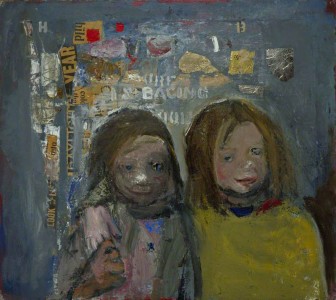
There are over 300,000 artworks from the UK's national collections to discover on Art UK. Your writing could shine a light on underrepresented artists, as well as famous ones, and champion diverse voices. See our Tips for writing for ideas about how to choose an artwork and write about it.
Write on Art is free to enter. Entries are divided into two groups, based on year of study. Please enter in the year of study you were enrolled in on 1st January 2024.
Years 10 & 11 (England and Wales) S3 and S4 (Scotland), Years 11 (4th) and 12 (5th) (Northern Ireland)
- Your essay should be 400 words maximum.
- Focus on describing what you see in your chosen artwork and how it makes you feel.
- Tell your reader why you have chosen this artwork and why it fascinates you.
- Consider ways you can make your writing enjoyable to read. See our 'Tips for writing' page for ideas.
Years 12 & 13 (England and Wales) S5 and S6 (Scotland), Years 13 (L6th) and 14 (L6th) (Northern Ireland)
- Your essay should be 600 words maximum (excluding footnotes).
- Focus on what your chosen artwork makes you think of and how it makes you feel.
- Tell your reader why you have chosen this artwork and why it fascinates you. See our 'Tips for writing' page for ideas.
- Demonstrate to the judges that you've done some research about the work you have chosen. Research how it has made other people think and feel. Read books and articles or listen to interviews about it. Refer to these sources in your essay.
- Give credit to the sources you have referred to in your essay either by adding footnotes at the end of your writing or including hyperlinked words and phrases in your text. (Essays that don't include references will be marked down.)
What could I win?
The winners in each group will win a cash prize and have their essays featured on the Art UK and Paul Mellon Centre websites. Prizes for the 2024 competition will be awarded at a ceremony in September.
- 1st place – £300
- 2nd place – £200
- 3rd place – £100
Background
Write on Art was set up by Art UK and the Paul Mellon Centre in November 2017. Its mission is to encourage an interest in art history among young people.
'Art History is the study of power, politics, identity and humanity and we should be doing all we can – with projects like this – to get as many young people as possible excited by art history and involved in it.' – Jeremy Deller, Turner Prize-winning artist.